In the dynamic world of aesthetics, regulatory change is coming — and as an aspiring practitioner you’ll want to be ahead of the curve. Here’s what’s happening in the UK, why it matters, and how you can prepare.
What’s happening?
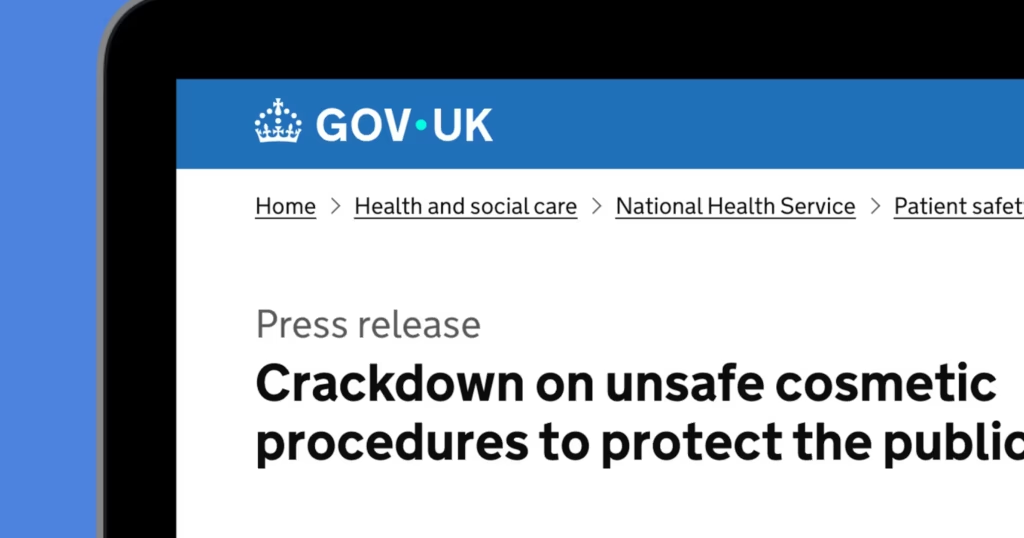
The UK government has announced that it will roll out new measures to crack down on unsafe cosmetic procedures, aiming to protect the public and raise professional standards.
Key points include:
- Only suitably qualified healthcare professionals will be allowed to perform highest-risk procedures (for example non-surgical “Brazilian butt lifts”)
- Clinics administering filler and toxin treatments will need to meet strict standards and obtain a licence.
- Under-18s will face restrictions in accessing certain cosmetic treatments unless authorised by a healthcare professional.
- A licensing regime and local authority oversight will be extended to lower-risk treatments (such as botulinum toxin, fillers) in due course.
Why it matters for students and new practitioners
- Credentialing and training will gain even more importance — Having the right qualification, evidence of supervised practice, insurance and risk management systems will be essential.
- The “safe practice” narrative is central — Clinics and patients will increasingly ask for proof of training, consent procedures, auditing and safe premises. If you build that mindset now, you’ll be better placed.
- Opportunity in regulation — As the boundaries of who can do what shift, there will be a demand for practitioners who understand the regulatory, clinical and ethical framework (not just the injection technique).
- Competitive advantage — Students who include modules on governance, legal/ethical issues, infection-control, and clinic-set-up will stand out in job interviews or when launching their own business.
What you can do now
- When you choose your training pathway, ask: Does the course cover the legislative/regulation environment of UK aesthetics? Does it cover clinic safety, risk management, consent and documentation?
- Build a portfolio showing not only technical competencies (eg: toxin, filler) but also safe-practice elements: client consultations, medical histories, adverse-event management.
- Stay updated: regulatory change may be phased. For example, Scotland launched a public consultation in December 2024 on tougher laws.
- Consider your future scope: if you plan to open a clinic or work as an independent practitioner, ensure you understand premises licencing, insurance, and what “suitably qualified” means in your role.
- Develop your personal brand around safe, evidence-based aesthetics rather than just trendy ‘tweakments’. That messaging will matter more.
Final thought
For students of aesthetics, this is a positive moment. Regulation brings clarity, professionalism and credibility to the industry. If you position yourself as a practitioner who cares about safety, ethics and standards — along with clinical skill — you’ll not only avoid pitfalls but be poised to lead the next generation in the industry.
Leave a reply